
Why a $130 Disney Ticket is Actually a Bargain
Why It Costs $130 Just to Keep the Lights On at the Magic Kingdom

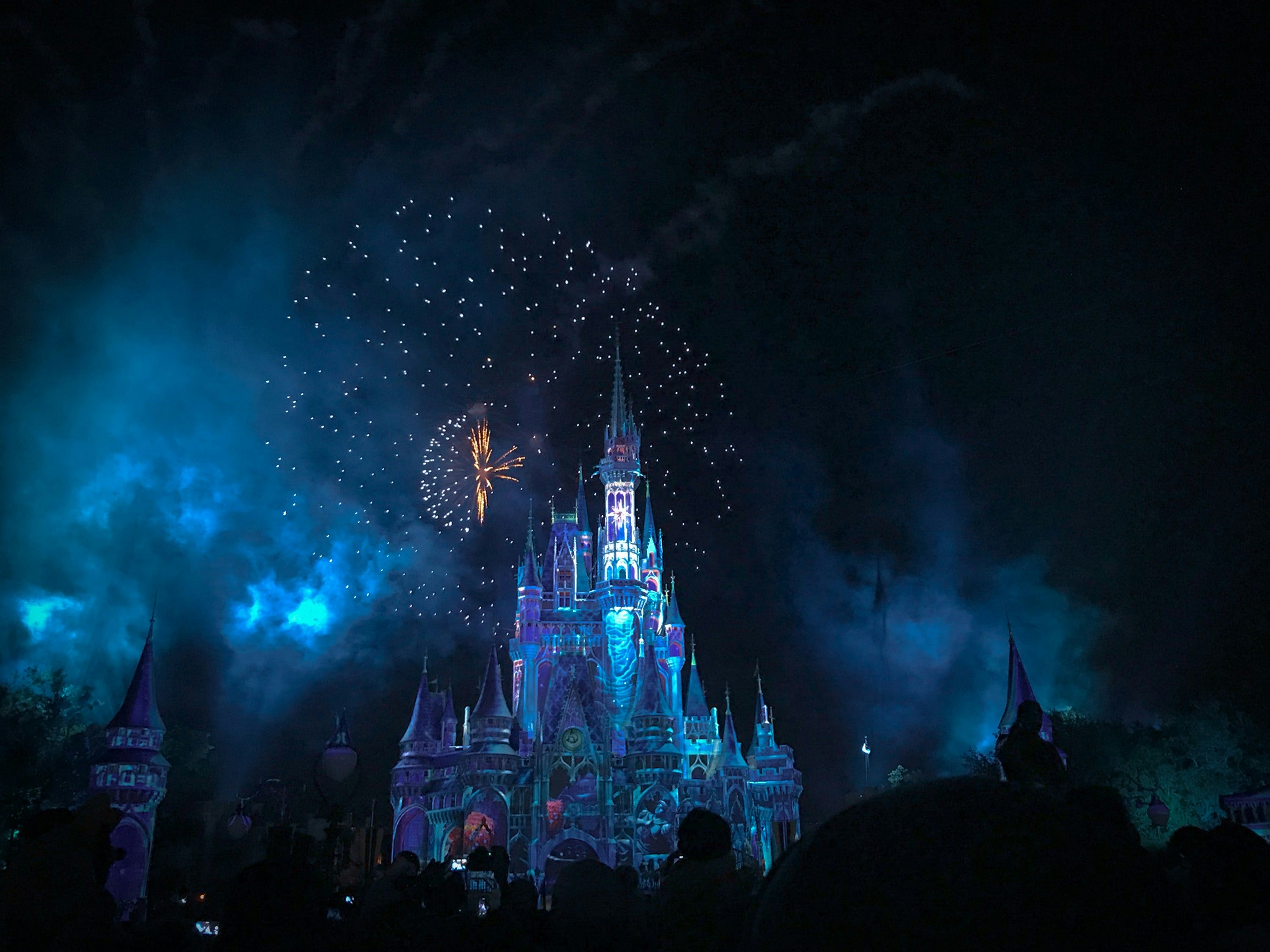
My whole life I’ve been fascinated by the business of Disney. It’s one of the most recognizable brands in the world. People travel from every continent to visit. Those characters everyone grew up with are just embedded into culture at this point.
You know what I don’t love? Paying $130-190 to get through the front gate.
That stings even more when you account for two things: I’m not going alone, and I’m absolutely spending more once I’m inside.
Which got me thinking. What are the actual margins on that ticket? Is Disney making a killing off admission, or is the $130 barely keeping the place running?
My hunch going in: the ticket doesn’t make them much. Disney World likely costs somewhere around that much per person per day just to operate, and the real profits compound behind the turnstile:
Food: $60-100/day
Merchandise: $50-100/person
Hotels: $250+/night
Parking: $35/day
Lightning Lane: $15-45/person
Let’s find out if that hunch holds up.
The Scale of What You’re Paying For
Disney World is a functioning micro-city.
25,000 acres. Roughly the size of San Francisco. Four theme parks, two water parks, a shopping and dining district the size of a small downtown, and more than 25 resorts and hotels, all operating 365 days a year. Disney World has its own transportation network, its own power infrastructure, its own waste management, its own fire department.
The logistics alone are staggering before a single guest pays for anything.
The Payroll Problem

Running that machine requires an army. Disney World employs roughly 80,000 cast members, making it the largest single-site employer in the United States. Bigger than any Amazon warehouse, any hospital campus, any military installation. Disney World.
Recent employment data puts the average annual pay for a cast member around $35,000. Multiply that across 80,000 people and you’re at $2.8B before you account for a single benefit, tax, or health insurance premium.
Disney’s own 10-K gets more specific. The “Experiences” segment (all parks, cruise line, and resorts globally) reported $8.95B in operating labor costs in fiscal 2025. Disney World draws roughly 45-50% of Disney’s total global park attendance, so a fair allocation puts labor costs at the Florida resort at around $4B annually.
Divide that across 365 days: $11M per calendar day. Just in payroll. Before a single light turns on.
Running tab: $11M/day
Keeping It All Running
$11M a day in payroll is a lot. But that’s only the people. There’s still the actual cost of running a 25,000-acre operation.
Start with property taxes, which we know precisely because Disney has been fighting their Orange County assessments in court for years:
Magic Kingdom: $14.4M (2024)
Epcot: $18.3M
Hollywood Studios: $14.9M
Animal Kingdom: $11.8M
That’s $59.4M for the four parks alone. Add hotels, retail, and the rest of the property and you’re at roughly $70M per year. Call it $192,000 per day.
Then there’s power. Disney World uses over 1.2 billion kilowatt-hours of electricity annually, enough to power roughly 90,000 American homes for a year. The annual electric bill runs north of $100M, though Disney has been chipping away at it with solar installations that now cover about 40% of the resort’s needs.
(Bonus fact: Disney World holds the legal right to build its own nuclear power plant on property. They’ve never used it. But it’s there in the charter.)
Running tab: ~$11.5M/day
The Investment That Never Stops
There are still maintenance, ride upkeep, insurance, transportation, and the nightly logistics of keeping a small city operational. Disney reports these as “infrastructure costs” in the Experiences segment. Taking Disney World’s ~45-50% share of global attendance, that bucket runs another $700M-$1B for the Florida resort annually.
And then there’s CapEx: the cost of building the next thing.
A quick note on CapEx vs. OpEx. Operating expenses (OpEx) are the day-to-day costs of keeping the place running: the electric bill, the payroll, the WD-40 for Space Mountain’s launch system. Capital expenditures (CapEx) are investments in future capacity, like the $500M it cost to build Star Wars: Rise of the Resistance, or a new hotel wing. CapEx doesn’t show up in the daily ledger the same way, but it absolutely has to be earned back from guests over time.
In 2023, Disney announced a $60B parks investment plan through 2033. Of that, $17B is earmarked for Walt Disney World specifically. That’s $1.7B per year, or roughly $4.7M per day of future capacity that today’s guests are paying for.
Stack it all up:
Labor $11M
Infrastructure (maintenance, IT, insurance, transport) ~$2.1M
Property taxes $192k
Utilities $274k
CapEx $4.7M
Total: $18-20M
Disney World’s Breakeven
Here’s where the math gets interesting.
Disney World drew 49.1 million visitors across its four parks in 2024. That’s roughly 134,500 guests per day on average. With ticket prices averaging somewhere in the $130-160 range (Disney doesn’t disclose exact averages, but this is the consensus estimate), daily gate revenue runs somewhere around $17-21M.
That’s... roughly what it costs to run the place.
Admission, by itself, barely covers overhead. The margin on a Disney World ticket is thin at best, possibly negative on slower days. And Disney knows this. It’s the whole point.
Where Disney Actually Makes Money
The ticket is the cover charge. Everything inside is the menu.
Here’s what a typical guest day looks like in terms of total spending:
Ticket (admission) $130-160
Food and drinks $60-75
Merchandise $20-30
Parking (amortized per person) $8-10
Lightning Lane (blended, not everyone buys) $10-20
On-property hotel (amortized, ~50% of guests) $75-175
Estimated total per guest per day: $300-470
The ticket is 30-40% of what a guest actually spends.
Total revenue tells the story more clearly. Disney’s Experiences segment posted $36.2B in revenue for fiscal 2025 with $10B in operating income. For Disney World specifically, total daily revenue works out to roughly $36M per day across all revenue streams. With 134,500 guests, that’s about $268 per guest in total daily revenue. Admission covers roughly half of that.
The rest? Food, merchandise, parking, Lightning Lane, hotels.
Lightning Lane alone generated $720M between October 2021 and June 2024. That’s roughly $260M per year in pure incremental revenue, extracted from guests who’d already paid to enter. Disney’s essentially selling you back your time.
The $8.49 pretzel isn’t incidental to the business model. It is the business model.
The Hypothesis Holds
The hunch I walked in with? Basically right.
The $130 ticket covers Disney’s per-guest operating costs with a thin margin, maybe none. Disney World runs at roughly $18-20M per day in fully-loaded costs, and gate revenue gets them most of the way there. The actual $10B in operating income comes from food, merchandise, hotels, parking, and an expanding menu of premium add-ons.
The 37% pay raises Disney’s union workers secured in 2023? Partly funded by the $45 Lightning Lane you bought at Magic Kingdom. The $60B expansion plan? Coming out of the $14 margarita you got while waiting for Pirates of the Caribbean.
Credit where it’s due: it’s a genuinely clever business model. Get people through the gate at cost, then monetize every hour they spend inside. The park creates the desire. Everything else captures the value.
You get one of the most impressive entertainment experiences on the planet. Disney gets a captive audience for 10 hours.
Everyone (mostly) wins.